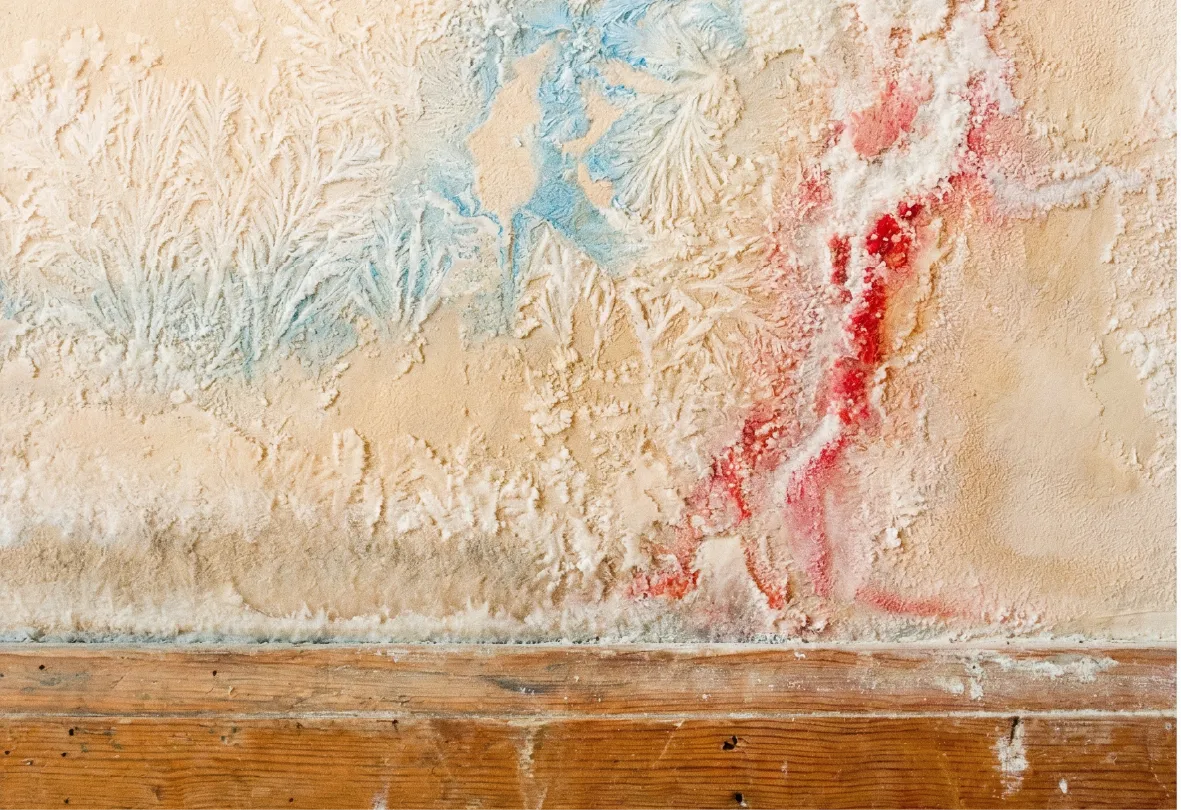
Skirting damage and salt deposits
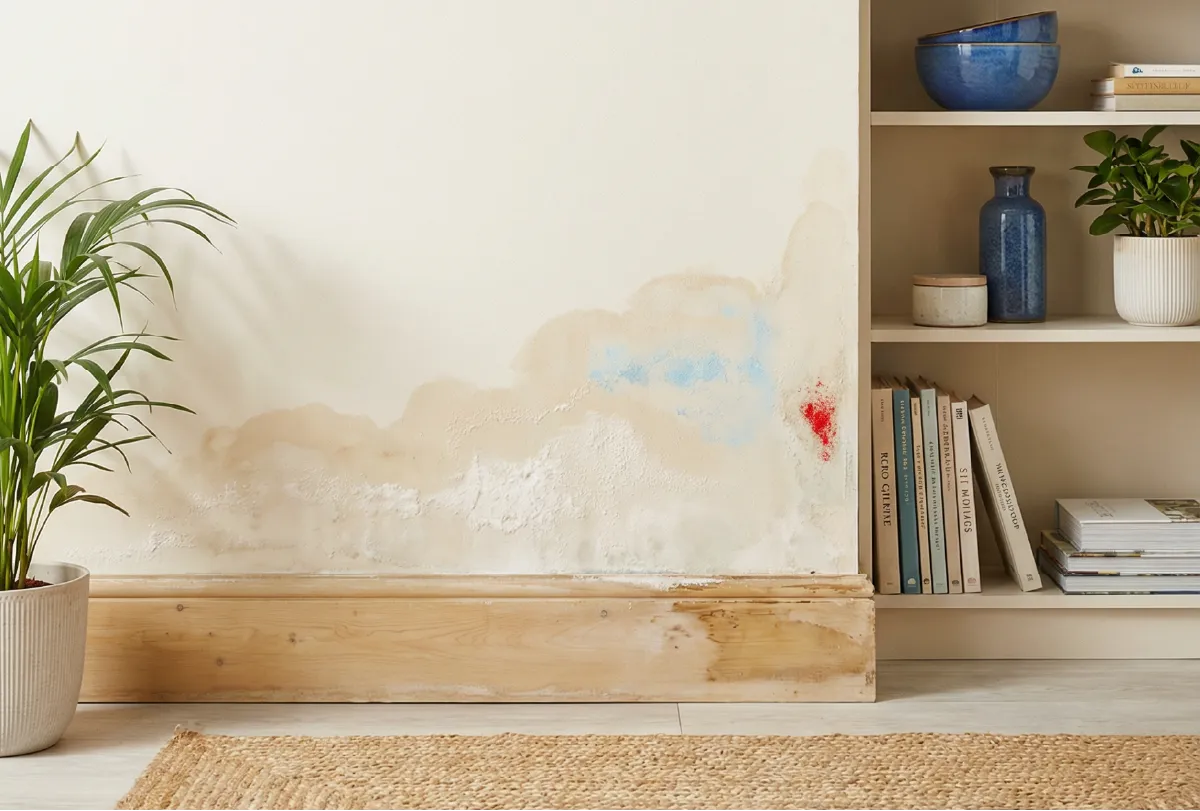
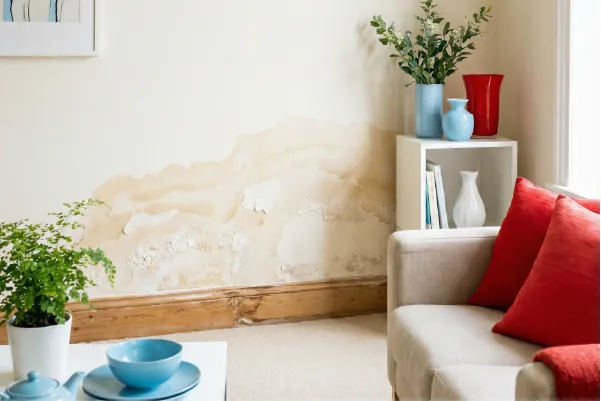
Lower wall deterioration, salts, flaking paint and damp finishes near floor level are common indicators.
Rising Damp · Diagnosis and guidance
Rising damp appears when moisture from the ground moves upward through porous building materials. It often affects lower wall areas, skirting zones and finishes near floor level, causing recurrent damage over time.

Rising damp usually starts from the lower part of the wall and tends to follow a fairly recognisable pattern. It is different from condensation, which is linked to indoor air, and from localised water ingress, which usually comes from a specific entry point.
Lower wall deterioration, salts, flaking paint and damp finishes near floor level are common indicators.
In many cases the finish is repaired, but the damage returns because the cause was never properly addressed.
Before acting, it is important to confirm whether the pattern really matches rising damp and not another moisture issue.
Rising damp often becomes more visible over time when repairs focus only on the surface. Paint, plaster or decorative finishes may be replaced, but the lower wall continues to show signs of moisture and salts.
Cosmetic repair may improve appearance temporarily, but the wall can deteriorate again if the underlying moisture remains active.
The lower band of the wall is usually the first to show recurring paint damage, salts and plaster weakness.
Height of damage, salt formation and repeated appearance in the same lower areas help confirm the diagnosis.
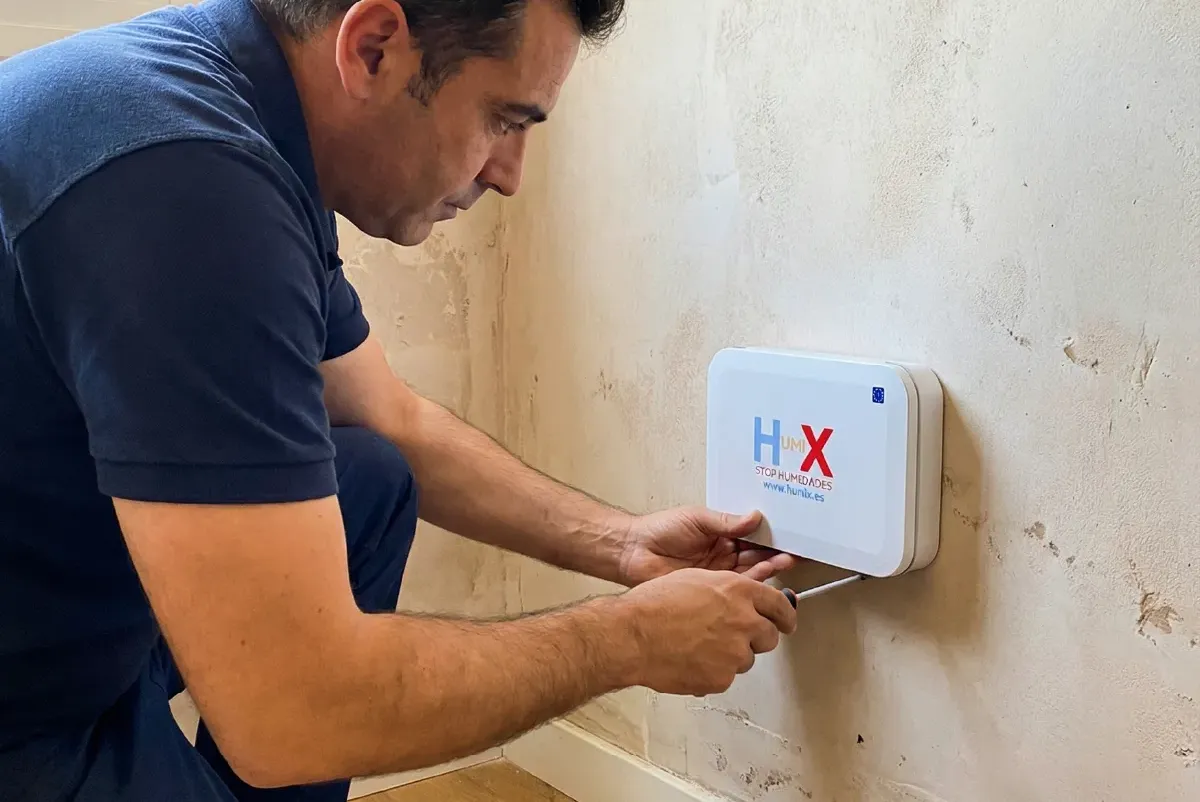
We first confirm that the case fits rising damp and not a different type of moisture problem. Then we define the appropriate technical path, which in this type of case is linked to the HUMIX System.
We review salts, height of damage, skirting deterioration, repeated finish failure and the wall-ground relationship.
When the case fits rising damp, the recommended technical path is based on the HUMIX System and a realistic drying strategy.
The wall does not recover instantly. Drying and finish recovery must be handled in the right order and timing.
Examples of salts, skirting damage, lower wall deterioration and cases linked to upward moisture.