Localised stains and marked outlines
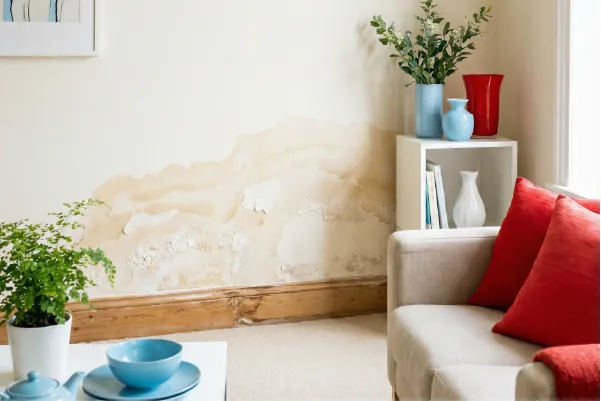
Damp patches, outlined marks, sagging finishes or recurring local damage are common signs of water ingress.
Water Ingress · Diagnosis and guidance
Water ingress appears when water enters from outside through a specific point in the building envelope, such as cracks, roofs, façades, joints or construction details. It usually causes localised marks, damp patches and visible deterioration.
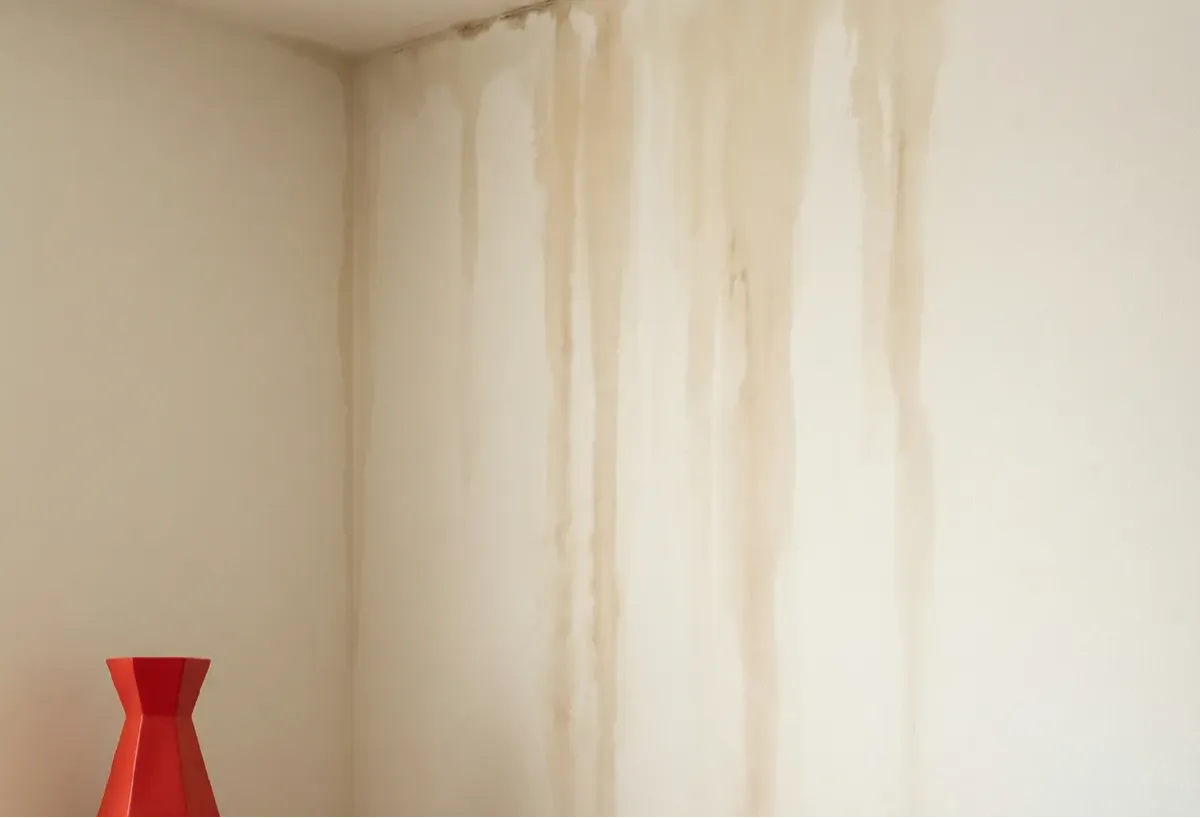
Water ingress does not usually behave like rising damp or condensation. Instead of appearing in a broad environmental pattern, it often shows as a localised patch connected to a specific route through which water is entering the building.
Damp patches, outlined marks, sagging finishes or recurring local damage are common signs of water ingress.
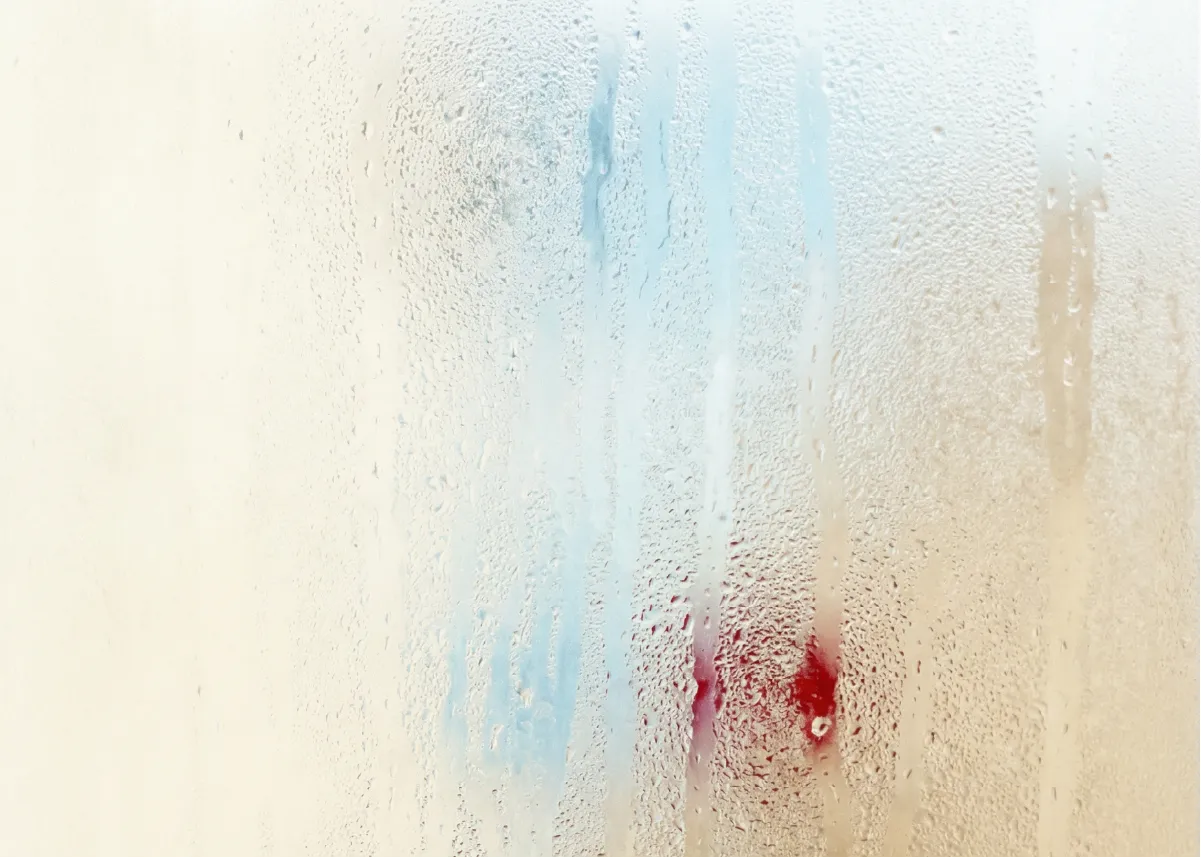
Condensation is usually related to indoor air and cold surfaces, while water ingress tends to have a more specific entry point and localised pattern.
Repairing the finish without identifying where water enters usually leads to the same damage returning.
Water ingress is often aggravated by rainfall, façade exposure, cracks, roof defects, poor joints, terrace issues or construction points that allow water to enter from outside.
One of the clearest signs is that the damp becomes more visible after rain, washing or external water exposure.
Façades, joints, windows, parapets, terraces and roofs are common areas where water can find a way in.
Painting or patching may hide the issue for a while, but the damage often returns if the entry point remains active.
First we confirm that the case is linked to localised water entry and not to rising damp or condensation. Then we focus on understanding where the water is entering and what construction detail may be responsible.
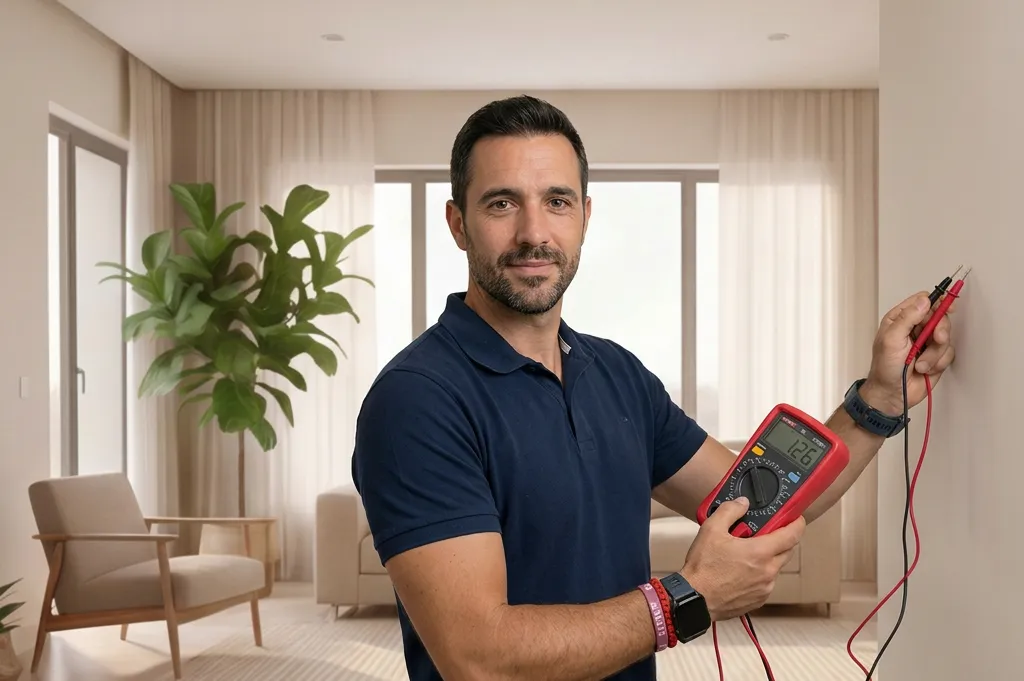
We assess the location of the patch, its behaviour after rain, visible construction clues and the path the water may be following.
The goal is to understand the likely entry point before deciding how the case should be technically approached.
Once the source is understood, the intervention should prioritise the cause before any final finish rehabilitation.
Localised moisture marks, visible deterioration and cases where the source needs to be identified before repairing finishes.